
RoRo vs Container Shipping – Which Is Best for Your Car Import?
When you import a car from Japan to Australia, you’ll choose between RoRo (Roll-on, Roll-off) and container shipping. Both work. The right choice comes down to your car’s value, how cautious you are, and your budget. Here’s a simple, honest breakdown.
Shipping is Step 5 of the import process read our complete car import guide to understand how shipping fits into the full timeline.
What Is RoRo Shipping?
With RoRo, the car is driven onto the ship, secured in a vehicle deck, then rolled off at the port here.
It’s the workhorse of vehicle logistics: reliable, frequent, and usually cheaper.
- ✅ Usually lower cost than container
- ✅ Regular sailings from major Japanese ports
- ⚠️ Car sits in the ship’s car deck (no personal items allowed)
What Is Container Shipping?
The car is loaded into a 20ft or 40ft sealed container. It’s the premium option for protection
and for shipping parts or multiple vehicles together.
- ✅ Maximum protection during transit
- ✅ Can include spare parts or multiple cars (shared container)
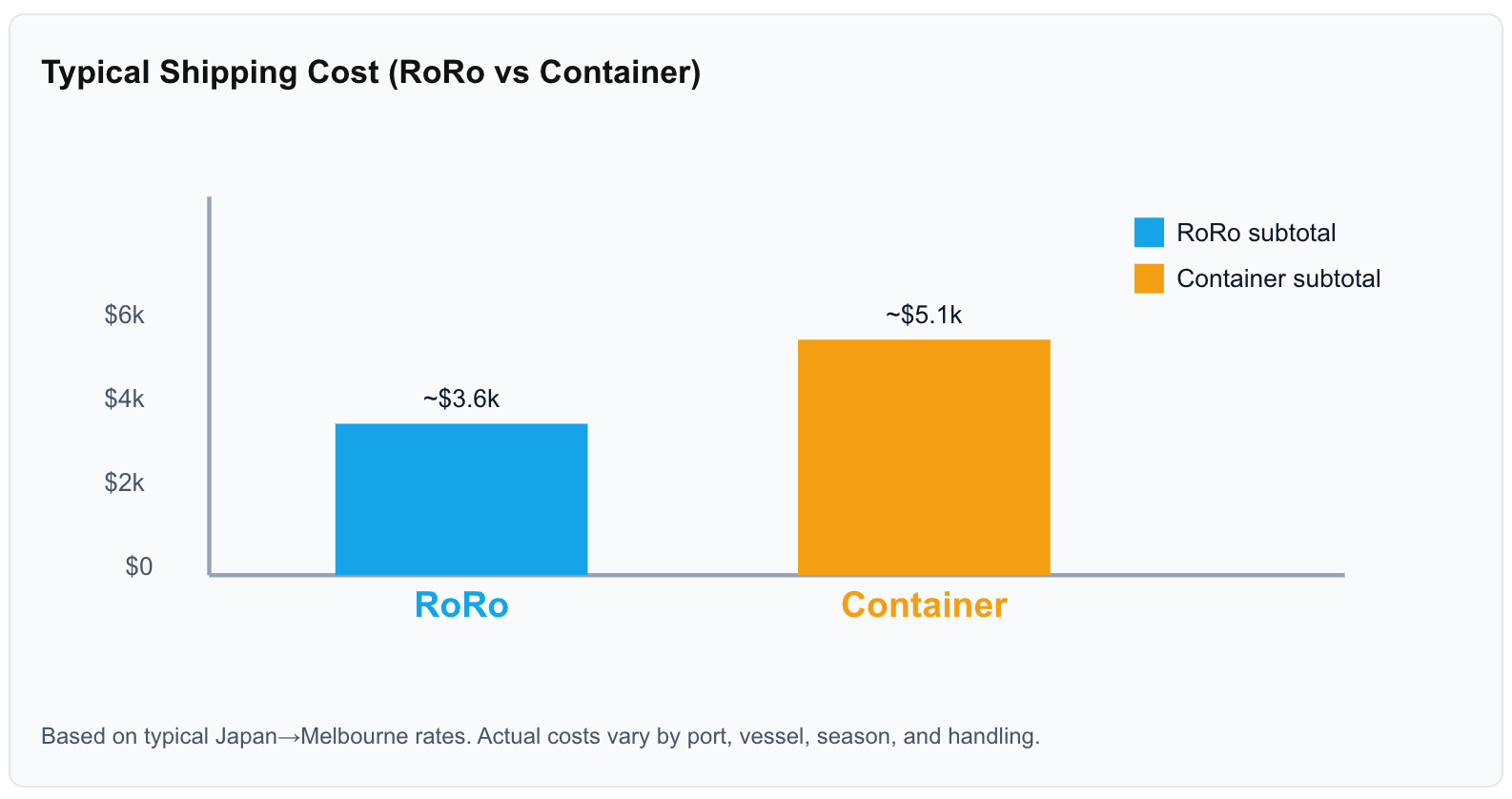
- ⚠️ Typically 30–40% more expensive
- ⚠️ Lead times can be longer (consolidation/unloading)
Cost Comparison (Typical Mid-Size Sedan to Melbourne)
| Item | RoRo (AUD) | Container (AUD) |
|---|---|---|
| Ocean freight | 2,500–3,000 | 3,500–4,500 |
| Marine insurance | 150–250 | 200–300 |
| Wharf/handling | 300–400 | 400–500 |
| Quarantine clearance | 300–500 | 300–500 |
| Estimated shipping subtotal | 3,200–4,000 | 4,500–5,800 |
Regardless of method, you’ll need to pay Customs Duty GST on top of shipping costs.
RoRo vs Container — Side by Side
| Factor | RoRo | Container |
|---|---|---|
| Cost | Lower | 30–40% higher |
| Protection | Moderate | High |
| Sailing frequency | Weekly (most routes) | Less frequent / consolidation |
| Parts allowed in vehicle | No | Yes (in the container) |
Typical Timeline
Quick Decision Matrix
When to Choose RoRo
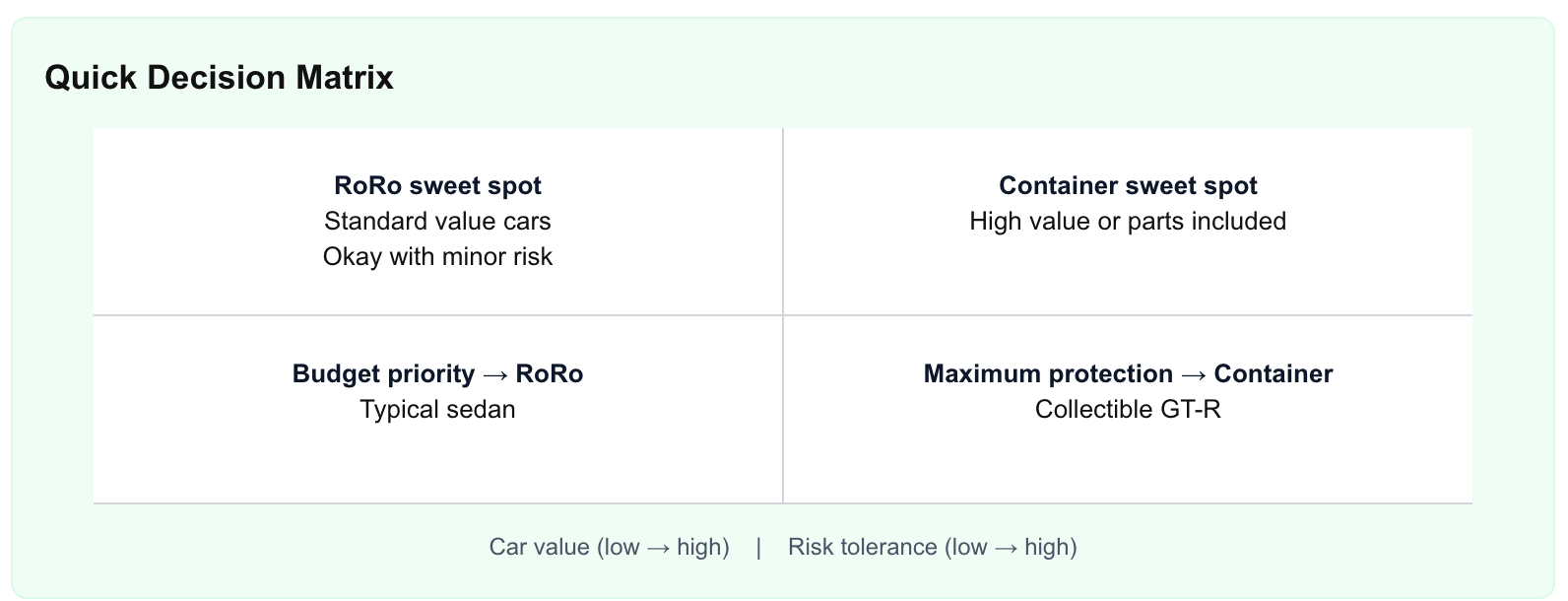
- Standard-value cars where budget matters most
- You don’t need to ship extra parts with the car
- You want the fastest, simplest route
High-value classics, such as those imported under the 25-Year Rule, are often best shipped in a container for maximum protection.
When to Choose Container
- High-value or collectible vehicles (GT-R, Supra, rare Euro)
- You want maximum protection or need to include parts
- You’re okay with a higher cost and possibly longer lead times
Why Import with Glam Groups?
- 22+ years handling both RoRo and container shipments
- Trusted exporters in Japan + compliant workshops in Australia
- Clear, transparent quotes before you choose a method
- 1,000+ cars imported safely and on time
Start Your Import Today
Still unsure which shipping method suits your car? Call (03) 9303 7252
or request a Free Shipping Quote below.
RoRo vs Container — FAQs
Which option is safer?
Container shipping offers the most protection. The car sits inside a sealed box, so it’s the safer pick for collectibles or high-value imports. RoRo is still widely used and reliable for standard cars.
How much more does container shipping cost?
As a rule of thumb, about 30–40% more than RoRo. On a typical Japan→Melbourne lane, expect roughly A$4.5k–5.8k total vs A$3.2k–4.0k for RoRo.
Can I put parts or personal items in the car?
Not with RoRo — vehicles must be empty. With containers, you can include parts (and even share a container), which is handy for builds and restorations.
Which is faster?
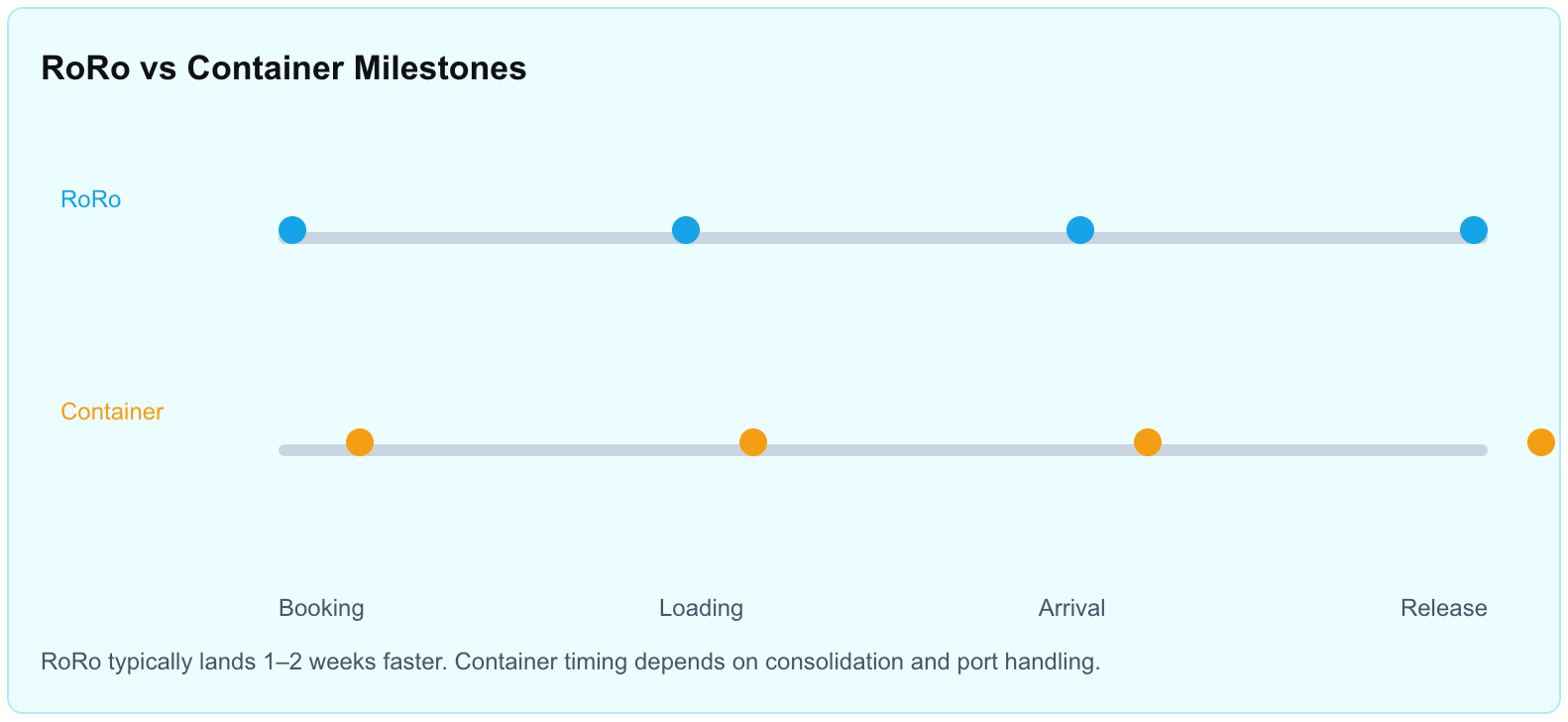
RoRo usually lands 1–2 weeks quicker. Containers can take longer due to consolidation and extra handling at each end.
Do I need marine insurance?
It’s optional but smart. Budget ~1–2% of the vehicle value. We can arrange insurance for either method.